Showing posts with label Sales Training. Show all posts

Sunday, September 8, 2013

5 Essential Knowledge for a Salesman to Close a Sale

5 Essential Knowledge for a Salesman to Close a Sale

5 Essential Knowledge for a Salesman to Close a Sale
Image courtesy of www.ioehope.com
Closing the Sale is the last part of the Sales Process. It is where the seller and the buyer have finally reached an agreement to proceed with the transaction. But before the seller or the agent or the salesperson can successfully do that. He must consider the following:

The 5 Essential Knowledge for a Salesman to Close a Sale:
1.Knowledge of Product
2.Knowledge of Inventory
3.Knowledge of Available Financing
4.Qualification of the Buyer
5.Knowledge on the Ability of the Buyer

Now what are these?


*Knowledge of Product - How can a Professional Salesperson recommend a product when he himself doesn't fully understand what the product does and what benefit it can bring to his customers? How can he convince his prospect if he can't even show the value or the importance of having it in the first place? It is really a must to master your product if you want to succeed.

*Knowledge of Inventory - You know how frustrating it can be when after all those times you've invested on searching the right product, going into fine details like how much does it cost, preparing your budget and then finally going into the store to personally check it. You talk to their sales clerk and discussed the details and the two of you agreed and she left to go get the product. She came back and then bang! You are told that they don't have the stock anymore!? So if you are the seller, you have to make sure that you are always updated of the inventory status of your product. Otherwise, not only that you are giving your competitor a chance but you're ill-prepared to do an up-sell or to offer a different but similar product.

*Knowledge of Available Financing - Oftentimes, you encountered some prospects that went to check out your product. Believing they're qualified, you proceed with your presentation. And you've done it in flying colors but when you tried to close the sale- you are told different kinds of stuffs like they'll go check the price on the other stores, go ask approval from their spouse or whatever different reasons they can think of. Of course they are absolutely interested with your product but without your knowing, their main objection is that they don't have the budget yet. In this situation, showing them the available financing scheme can likely increase your chances of closing the sale. As easy as telling them that you accept credit cards or you can arrange with your in-house financing facility can greatly help you get that sale. So go check out what are the available financing scheme that you can possibly offer to your customers.

*Qualification of the Buyer - Now this involves skill! This maybe tricky especially if you are new to sales. But this can be done thru asking the right questions. Find out their motivations, their desires, how high or low if you can identify it. Check out their background, their personal or professional needs, any gaps that you can spot and focus on it. Most important is to check out their financial capacity, from there you can offer the right product that are perfect for them and for their budget.

*Knowledge on the Ability of the Buyer - Like the one above, this isn't simple. This involves initiative and hard-work. Probably an A-Lister, the who's who among the society. A research might be needed on top of the usual information gathered thru questioning. Not only will you know the buying capacity of the prospect but as well as its ability- like a very sophisticated, well-informed, and well-connected buyer. If you know how to sell to these types of customers then its guaranteed you'll gonna make them your customer for life.

Ponder this!

*A doctor cannot tell you what's wrong with you unless he knows your sickness!
*A doctor does this - asks questions, eliminates areas of improbability, eliminates symptoms, arrives at a decision and prescribes the right medication. This is what a Professional Salesperson should do!
*Definition of a "Similar Situation close" - Everybody is doing it so it must be great!
*You don't tell people what they should do, you ask the right questions and when they answer - they tell you. When they tell you, they believe what they said is true. Now you lead them to the decision which is to own the right product or service.
*Whenever you have the temptation to go tell them what to do - Stop and think "As a professional, How can I ask it?".
*A sale is nothing more than a sum total of Yeses!
*A lot of people buy different products and services for different reasons. As the old saying went- "Different strokes for different folks". Thus, personalization is the key.
*The emotions are the things that you must arouse. You must get them to a point wherein they're emotionally ready to make a decision. You must arouse them to be emotionally involved = To get to the feeling that they must have the product.
*A professional doesn't really answers an objection, he asks the right question and leads them to answer their own objections.

Happy Selling!

Saturday, September 7, 2013

Top 8 Reasons Why you should Use Questions in Closing a Sale

Top 8 Reasons Why you should Use Questions in Closing a Sale

Top 8 Reasons Why You should Use Questions
Image courtesy of www.juliesbicycle.com
A professional salesperson is a consultant. He or she should guide the prospect make the right decision all throughout the buying process. What's important is for the salesperson to take charge, to take lead, to be in control and how to do it is through asking the right set of questions.

It has been said that the one in control is the one asking the right questions. A professional salesperson doesn't just tell people but he asks them. More often than not, if you tell people things- they tend to doubt it but if you relay the message through asking the right questions- they believe it. Or in other words, if you say it- they doubt it and if they say it- it's true. This holds true especially if you haven't established your credibility yet- either you're just starting out in the business or simply because you haven't known each other yet.

Top 8 reasons why you should use questions in closing a sale:

1.To gain control
2.Isolate areas of interest
3.Acknowledge of facts
4.To receive minor agreement
5.It defines the areas where there is most interest in their minds.
6.To arouse and control emotions.
7.To isolate objection
8.To answer objections

Here's why:

  • To gain control - Not only this will keep the process smooth and orderly but as well as this saves you time by strictly following the Basic Steps in Selling.

  • Isolate areas of interest - Basically forms part of the Needs Analysis stage. An excellent opportunity to get to know and understand your customer. Can also be a great way of making sure that the prospect is highly Qualified.

  • Acknowledge of facts - Present ideas and make sure that you get a buy-in. Don't fight your prospect simply because you knew that he or she has the wrong knowledge or information. Your role here is to convince and it now depends on your creativity on how to present the facts so that you'll get the acknowledgement or the agreement that you need.
  • To receive minor agreement - According to Tom Hopkins, the Number One American Sales Trainer- "A sale is nothing more than a sum total of yeses!" By asking the right questions at the right time, make sure that you and your prospect has some minor agreements established early on along the sales process. As you came closer to the final Closing Stage, this wouldn't be difficult for you.

  • It defines the areas where there is most interest in their minds - The step where you use the FAB Selling (Features, Advantages, Benefits Selling). What are the benefits of your products compared with the competitors and the type or the quality of the service that  they're most interested in.

  • To arouse and control emotions - By this time, you now have the idea on what could possibly be their "Hot Button or Buy Button". Through the use of questions, you may make emphasis around it and show the product's great benifits or reasons why they should have your product. This could also be used to deflect certain negative emotions or sentiments towards your product.
  • To isolate objection - Through the use of questions, you may be able to identify certain negative perceptions about your product. This could happen through poor product understanding from the customers side or probably through negative reactions heard from somebody who weren't happy with the product. You can isolate their objection by presenting the right information thru influencing and by using the right question.
  • To answer objection - Again, if you say it- they doubt it and if they say it- it's true. And you can effectively use this through using the appropriate question relevant at the timebeing. 

Ponder this!
*A professional asks questions and gives the right answer swiftly. Just in time before he hears a not-so-nice reply from the prospect.
*The basic premise of professional selling is - To lead them to make a decision of which you think is the best for them.
*I can't lead people to a decision until I make it.
*The saddest part of the selling profession is - the Average Salesperson lets them make the decision!
Example:
What do a Doctor tells you when you are sick? Is he not telling you what to do for you to get healed? That's the same with Professional Salesperson. He tells you what to buy!
Another example: A taxi driver lets you drive to your destination or a Surgeon gives you a scalpel and let you try it on yourself for awhile.
*A professional makes the decision because that's the reason they're professional.
*Don't ask a question that you think the customer can't answer because it will make them feel stupid.
*If a customer don't like you then they will not buy from you.
*If your tactics are sound, they can't fight you.
*With questions - you are in absolute control.
 
Happy Selling! ;D

Sunday, September 1, 2013

Deconstructing a Pushy Salesperson

Deconstructing a Pushy Salesperson

Photo courtesy of saleshq.monster.com
Old school sales person are those type of sales people who are very pushy with their products that they almost have to literally shove their products (if they can) up close to into your face! They almost always into hurrying up to close the sale with you that instead of getting to love the product - you are actually being repelled by their actions.

This is a No-No for an aspiring Sales Pro!

Probably, you are a pushy sales person too and you didn't know that.

A pushy salesperson most of the time tells their customers this (or probably similar to this):
  • This is the best product there is!
  • This is absolutely what you need! 
  • You should take advantage of this. 
  • You better hurry, promo is about to end, inventory is getting low! 
  • This is the best product available there is in the market today.
The above example all leads to a conclusion from the prospective buyer that the salesman benifits more than the buyer.

Things to Remember:
*A professional sales person doesn't tell people things but he can asks them.
*If I tell them things - they tend to doubt it, if I'll ask the right questions - they'll believe it. Or in other words- if I say it - they doubt it, if they say it - it's true.
*If you're just starting at sales - master the products first before finding the customers that needs it.

Common Mistakes to Avoid:
*An average salesperson that is overwhelmed by their product - thinks that the best thing to do is to keep on talking and talking to a prospective customer and that its what all they have to do for them to make a sale.

Ponder this!
How many mouths do you have?
How many ears do you have?
A professional salesperson realizes that you have to use them according to its percentage.
You have to listen as twice as you need to talk.

Happy Selling!

Sunday, August 25, 2013

The Average, the Good and the Great (Salesman)

The Average, the Good, and the Great (Salesman)

I'd like to quote Mr. Tom Hopkins from his book "How to Master the Art of Selling Anything". There's a comparison there between the Average, the Good and the Great salesman.

The following are the qualities of a Great Salesman: 
  • Burning desire to Achieve!     
  • This is one thing that is hard to measure. If only there's a device that can measure a person's desire so that we could tell who will keep on moving, who will quit and when they give up then that would be great! Running a business wouldn't be that difficult. And we could have figured sooner and save a lot of our time.
  • They do what they fear most!
  • They learn what their fears are - they attack them, they overcome them, they are successful at them. Once they've done that, they've develop the confidence that they radiate from overcoming that fear.
  • They keep their Enthusiasm while they're failing.
    Some sales people are only good when things are good. A Great salesman no matter how bad the situation is - he never lost his enthusiasm. He never let himself be affected by the bad events that turn out in his life. He remains to be happy, excited about life, radiate with positivity. Usually, what he does is he will identify the problem, tries to solve it, take care of it and move on. Still keeping the enthusiasm even though at times he failed.
  • They Love people.
    They have love-affair of the people they serve and that's why they take lots and lots of referrals. They enjoy meeting new people building lots of contacts and expanding their network.
  •  
  • They don't take Rejections personally.
  • They knew that the customer or the prospect rejected the product, the price, the service, the company but not themselves. It has never been personal to them.
  • They Invest in their Education and are Students of Techniques. 
  • Every great sales person, every great companies - they share a common characteristic - of believing in education. They tried to have their people to attend to seminars, encourage to read books, suggests to listen to audio recordings, etc. All in the name of education, acquiring new skills, getting updated. Thus, keeping their mind sharp.
 Points to Ponder:
 
*Only you personally can measure your desire - and you can do that by asking yourself this question: "How much pain can I handle until I quit?"
*We want to change our environment, and the way we change our environment is by changing the inner state of our mind.
*You put finer things in your mind and the finer things will gravitate towards you.
*Empty the coins in the purse of your mind and your mind will fill your purse with coins      - Benjamin Franklin

Happy Selling!

Wednesday, August 21, 2013

Common Characteristics of a Champion Salesman

Common Characteristics of a Champion Salesman
b. rahi koh Tries Blogging
Image Courtesy of advertisinginconstruction.com

Mr. Tom Hopkins - the recognized American #1 Sales Trainer and The Builder of Sales Champions (you may want to visit his bio here). The following are the common characteristics of a Champion Salesman:
According to
  • Appearance - a champion salesman is very concerned with their appearance, their grooming, their attire. They put more premium on their looks - like having a clean beard and a neat hair cut and invest on some of their valuable tools like car, cellphones, laptops, etc. 
  • Pride - they glow with confidence and pride. They possess tremendous amount of it not only for their profession in selling but as well as pride as a human being. A pride in the service that they render and the value of the products they offer. 
  • Confidence - you can feel the confidence these people radiate. Clearly a challenge for those people who are still new and are struggling to build one.
  • Warmth - they warmly, lovingly leads people. Not because they're warm and nice and cannot close the sale- of course not! They warmly, lovingly close the sale!
  • Self-assurance - a Champion Salesperson only looked for one person for their assurance and that is their Self. They realized that they're in a world where a lot of people really don't care. And for him to survive, is he have to make himself, his family, his loved-ones better thru this profession of selling. This is also what we call as Self-reliance.
  • A Champion is one who always wants to Win! To succeed, to make themselves better.

Thoughts to Ponder:
*People are being moved more by your belief, conviction, and the confidence you have in yourself, your product and your service.
*Some inexperienced sales people are too nice enough that they failed or finds it hard to close a sale.
*A Champion sales person doesn't have to be pushy but with warmth, he closes and leads them to a sale. He often uses techniques that are so strong but deliver with such warmth.

Sunday, August 18, 2013

Steps to Learning: Habits Essential to Success!

Steps to Learning: Habits Essential to Success!

Successful people have this great interest at learning. Be it for something that is valuable to their career or profession - for them to update or hone their skills or be it as a necessity in order for their endeavors to succeed - like for their businesses or investments. Some also do it for pure passion - like hobbies and crafts.

On the contrary, average and mediocre people stop to learn new things. Thus being stuck and outdated. When time comes when new technologies or methodologies are being introduced, they find it hard to adopt and found themselves obsolete.

That is why in order for us to become successful, we should develop the habit of Learning. For us to be successful and efficient at it, we at Sales have to understand how to do it. Please find below the Steps to Learning: Habits Essential to Success. 


b. rahi koh Tries Blogging
Image courtesy of ww.teachhub.blogspot.com
Steps to Learning: Habits Essential to Success!

  1. Impact
  2. Repetition
  3. Utilization
  4. Internalization
  5. Re-enforcement
 1.) Impact! - something you have watched, heard, read, identified or stumbled upon on anything that caught your attention and is of a great interest or value to you (be it in the near-term or in the future).

2.) Repetition - as the cliche went "Repetition is the Mother of All Learning". 

According to Tom Hopkins - "Approach any material only once and it will have a Minor Effect on your Life & your Future.The second time, you'll start to Feel it. The third Time and you will say - I Now Grasped the Concept!". Once you have the Concept, it's Not Difficult to take the Idea anymore, making mastery at it and soon making it yours.

3.) Utilization - taking the Impact (the Idea, the Concept, the Knowledge), repeating it, mastering it and then going down into using it (Actual Application).
 
4.) Internalization - You repetitiously use the technique and perfecting it. You Internalized it until it Becomes You.

5.) Re-enforcement - Not forgetting the Basics. Back in my school days- I always heard my teacher says: Review! Always do some Review (at your lessons). Having the discipline - making yourself do what you don't want to do.

Some Thoughts to Ponder:

*The Pro every year goes back to basic. Just like the professional athlete wherein they spend most of their time doing and perfecting their craft.
*The more professional, the more talented, the more successful an athlete is, the more he spend his time doing practice! 
 

Saturday, August 17, 2013

The Basics of Selling: Steps to become a Successful Sales Professional

The Basics of Selling: Steps to become a Successful Sales Professional


b. rahi koh Tries Blogging
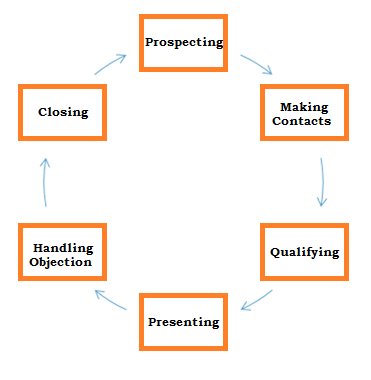
  1. Prospecting 
  2. Making Contacts
  3. Qualification
  4. Presentation
  5. Handling Objections
  6. Closing
The above are the steps that each Sales Person must master for him to become a successful sales professional. Now what are they:

Step 1: Prospecting - this is the first step for you to have a sale. You have to identify who, be it a person, an organization or a company that you think needs your product or service.

Step 2: Making Contacts - after identifying who your market is (the prospects), you have to have the names, the contact numbers, the address (if possible) and identify the product or service that they are most interested in.

Step 3: Qualification - this is the process wherein you have to identify your prospect whether he or she is highly motivated to avail of your product. Also, this will be the step of identifying the prospect whether they really have the need or the demand (gap analysis) in which your product or service will help them address or solve a problem or fulfill a particular desire.

Step 4: Presentation Skills - An important skill set for a sales professional to master. It's where the beef is! The Make or Break Stage. Observe how the successful sales people do their presentation and you'll see why.

Step 5: Handling Objections - the more objection a Qualified Prospect have, the bigger the chance of knowing that indeed he or she is really interested in your product. The Challenge for you is on how to identify the top 3 Main Objections are and if you have satisfactorily addressed it, chances are you will most likely close the sale.

Step 6: Closing - the last step wherein you have finally made your Prospect to agree to a sale.

Understanding the basics guides you on how to become an effective Sales Professional. The challenge now is for you on how to master each of these steps. Hard-work is not enough. Mastering the Basics of Selling is Key.

Some Thoughts to Ponder:

*Professionals review the Basics once every year!
*You Earn an income in Direct Proportion to your skills.
*Usually, the problem with people is that they Stop Doing what they Did to get where they are today.


Happy Selling! ;D

Thursday, August 15, 2013

Sales Profession: Top 3 Reason Why You Should Consider it

Sales Profession: Top 3 Reason Why You Should Consider it

b. rahi koh Tries Blogging
"Selling is the Highest-paid Hard Work & the Lowest-paid Easy Work."
 
Well, I heard it first from Mr. Tom Hopkins, the recognized #1 Sales Trainer in America. The man I credited with making myself more professional and more successful at the same time.

It's from him where I got my confidence as a salesperson and making me muster the required skill set of leading a successful sales organization. I think it is just right for me to share it to everybody the knowledge and the experience I gained through the years of being into this profession called selling. I have been into this profession for over 12 years now and never did I think of leaving or venturing out of this.

In fact I even encourage any one to try it out. Ever wonder why?

A few advantages of belonging into the Sales Profession are as follows:
1.) Freedom of Expression - Freedom to be Yourself. Freedom to become Successful as you Like to be. There's No Income-Ceiling and nobody Limits your Income but you!

2.) It Takes a Low Capital Investment, with High Potential Return - How Little it Takes to Get into this Profession but with Tremendous Income Potential, with No Limits on Earnings.

3.) Its Self-Satisfying - You Feel Good seeing your Client Walked out with your Product.The Thrill of Having to Help People Achieve what they want in Life by Offering them your Product or your Service.
Of course there is a lot more reasons but I think that's the Top 3 on the List.

Some Thoughts to Ponder:
*Selling is a Daily Challenge - you don't know what will happen at the end of the day.
*You Grow in Direct Proportion with your Abilities & Skills. No one Limits your Growth but You! If you Want to Earn More, you Learn More, You Do More, and You're Paid for it.
*Successful Sales People who are Earning a lot More are Competent People who knew what they're Doing.
*There has never been a Great Salesperson Born Great! They're all been Trained Great!
*If its Not Fun, its Not Worth it. Life's Meant to be Fun! And Selling is Fun!

Happy Selling! ;D

Disqus for b. rahi koh Tries Blogging